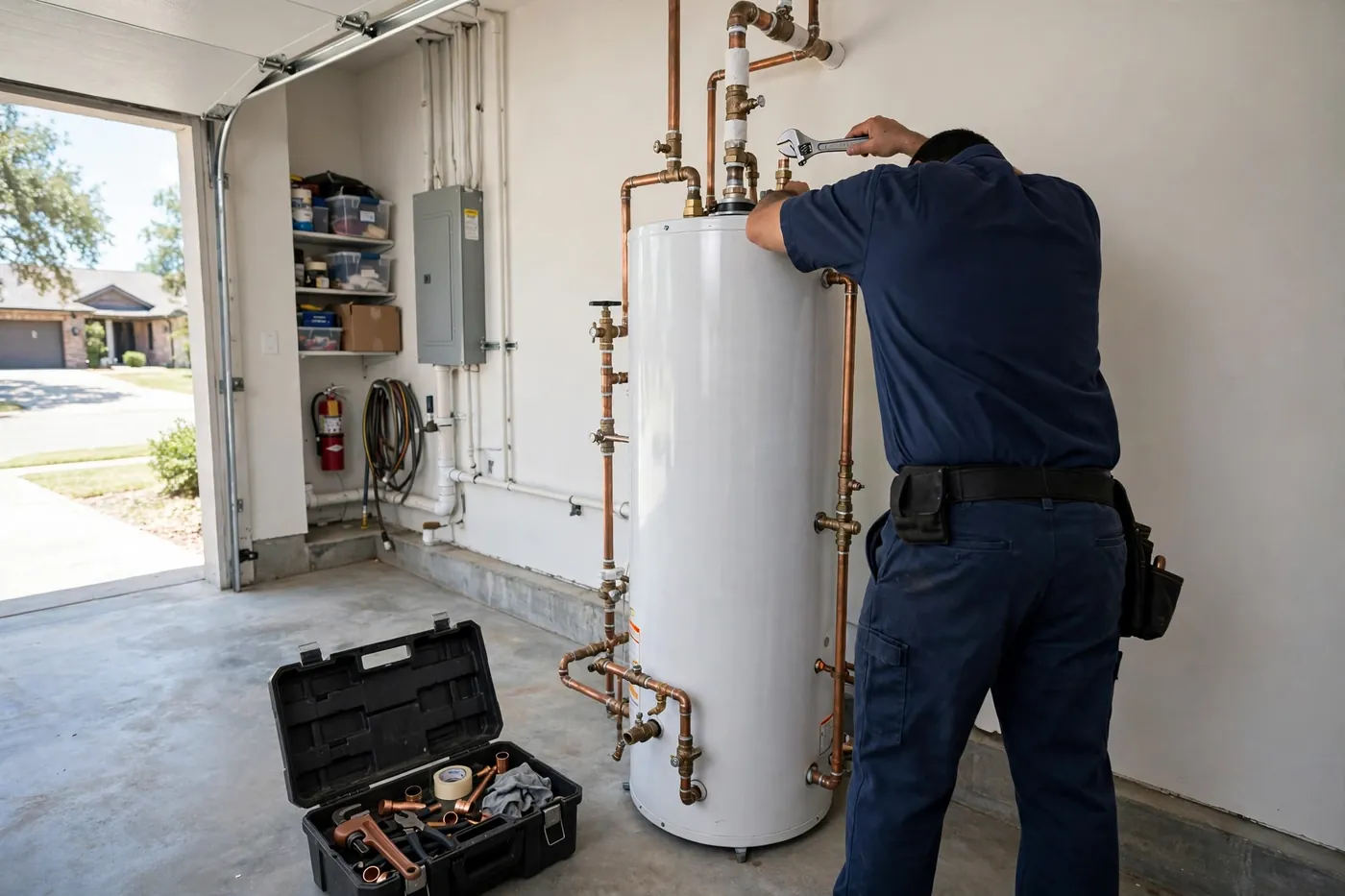
Plumber flushing a tank water heater in a Seagoville home garage to clear hard-water sediment
Seagoville, Texas · ZIP 75159

Water Heater Maintenance and Flush in Seagoville, TX

Seagoville tap water is hard, about 9.5 grains per gallon, and hard water is what kills water heaters early. Sediment settles in the tank, scale coats the heating surfaces, and the anode rod is used up faster than it should be. A yearly flush, an anode rod checked on schedule and a tankless descale once a year are the maintenance that keeps a Seagoville water heater alive, and this page sets out the schedule that fits this city's water.

Call (833) 382-2711 Popping noises, rusty water or hot water running out early: book a flush.

Open Mon-Fri, 7am-6pm

  • Yearly tank flushing for Seagoville hard water, about 9.5 grains per gallon
  • Anode rod checks and replacement, tankless descaling, full inspection
  • Annual flushing adds roughly 2 to 4 years to a tank's life
  • Yearly flushingBuilt for hard water
  • ZIP 75159Every neighbourhood covered
  • Licensed-plumber workDone to Texas code
  • Tankless descalingYearly in hard water

How often should a water heater be flushed in Seagoville? The quick answer

Once a year. Call (833) 382-2711 to book a flush anywhere in Seagoville, TX. Seagoville tap water is hard, about 9.5 grains per gallon, and sediment builds up fast in a tank that is never flushed. Annual flushing adds roughly 2 to 4 years to a tank's life, and tankless units in hard water need annual descaling too.

A maintenance visit covers more than the flush: the anode rod is checked, the temperature and pressure relief valve is tested, the burner or elements are looked over, and the shutoff valves are checked. Read the Seagoville hard water section for why this city's water makes maintenance matter more here than in most places.

What maintenance covers

What a water heater maintenance visit includes

Maintenance is a short visit with a long payoff. Each part of it protects a different piece of the heater, and together they are what takes a tank from the bottom of its 8 to 12 year range to the top of it.

Tank flushing

The tank is drained through its drain valve to carry sediment out with the water. In Seagoville hard water the first flush on a tank that has never been serviced can run cloudy for a while, which is the sediment leaving. A yearly flush keeps the layer from hardening on the bottom of the tank, where it insulates the water from the burner or the lower element.

Anode rod check and replacement

The anode rod is a sacrificial metal rod inside the tank that corrodes so the tank itself does not. Once the rod is used up, the tank starts corroding instead, and rusty water is the first sign. In hard water the rod is used up faster, so it is checked every 2 to 3 years and replaced when it is worn down to the core wire or coated in scale.

Tankless descaling

A tankless unit heats water through a narrow heat exchanger, and scale from hard water narrows those passages fast. Descaling circulates a cleaning solution through the unit and restores flow and temperature. Fluctuating temperature, error codes and low flow are the usual signs that a descale is overdue.

Relief valve test

The temperature and pressure relief valve is the safety valve that opens if the tank overheats or over-pressurises. It is tested at each visit, because a valve seized shut by scale is a safety problem, and a valve that drips constantly needs replacing.

Burner and element check

On a gas heater, the burner is checked for a clean flame and the venting is looked over. On an electric heater, the elements and thermostats are checked, because a lower element buried in sediment fails early. Either way, the check catches the fault before it becomes a cold shower.

Shutoffs and connections

The heater's shutoff valve, the water connections and the drain pan are checked, because a shutoff that has seized is no use when a leak starts. In an attic install, the drain pan and its drain line get a look too, since a blocked pan drain turns a small leak into ceiling damage.

Maintenance taskHow often in Seagoville hard waterWhy it matters
Tank flushEvery yearClears sediment before it hardens and insulates the tank
Anode rod checkEvery 2 to 3 yearsA used-up rod lets the tank itself start corroding
Tankless descalingEvery yearScale blocks the heat exchanger and causes error codes
Relief valve testEvery yearA seized safety valve is a safety problem
Burner or element checkEvery yearCatches a failing burner or element before it fails
Shutoff and connection checkEvery yearA seized shutoff is no use when a leak starts
Simple by design

How a maintenance visit works here

There are no forms on this site to fill in. Calling is the whole process, because a two-minute conversation sorts out what a form never can: what heater you have, when it was last serviced, and what you have noticed.

Call and describe the heater

Call (833) 382-2711 and say what you have: tank or tankless, gas or electric, and when it was last flushed or serviced, if you know. Mention any noises, rusty water or temperature trouble.

Flush, descale and inspect

The tank is flushed or the tankless unit is descaled, the anode rod is checked, the relief valve is tested, and the burner or elements and the connections are looked over. A first flush on a long-unserviced tank takes longer than a yearly one.

Straight answer on condition

You get a plain account of what was found: how much sediment came out, the state of the anode rod, and whether anything needs attention before the next yearly visit. If the tank is near the end of its life, you hear that too.

Early warnings

Signs your Seagoville water heater needs maintenance now

Most water heaters give warning before they fail. These are the signs that sediment or scale is already a problem, and each one is cheaper to fix now than after the tank fails.

Popping or rumbling noises

The classic sign of sediment. Water trapped under a layer of sediment at the bottom of the tank boils and pops as the heater runs, and the noise gets worse as the layer thickens. A flush is the answer, and the sooner it happens the better.

Hot water runs out sooner than it used to

Sediment takes up space in the tank and insulates the water from the heat source, so the same tank holds less usable hot water and heats it more slowly. A flush restores capacity that sediment stole.

Rusty water from the hot tap only

Rust in the hot water but not the cold points to the tank or the anode rod. The rod is usually used up, and the tank itself has started corroding. A rod replacement can still save the tank if it is caught early.

Water takes longer to heat

Scale coating the heating surfaces means the burner or elements work longer for the same hot water. Energy use climbs with it. Flushing and descaling restore heating speed.

Tankless temperature swings or error codes

A tankless unit that fluctuates between hot and cold, or throws error codes under load, usually has scale narrowing the heat exchanger. A descale restores flow and temperature, and it is a yearly job in Seagoville hard water.

Dampness around the base

Dampness at the base of a tank is the one sign that usually means replacement rather than maintenance, because it points to the tank itself failing. Call first and describe what you see, and do not wait for it to become a leak.

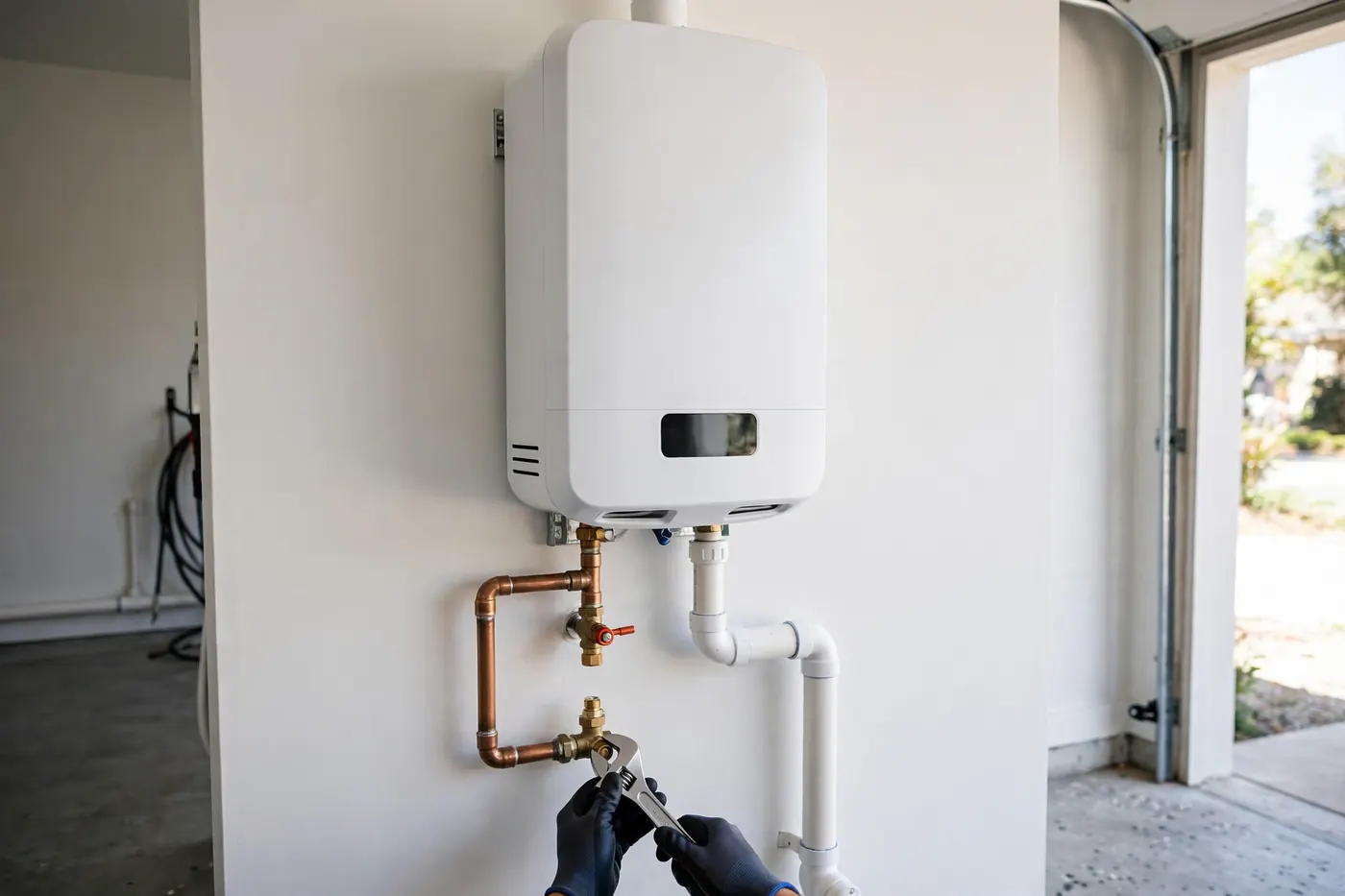
Tankless water heater mounted on a garage wall being descaled in a Seagoville home

Tankless units need annual descaling in Seagoville hard water, or scale blocks the heat exchanger.

Local, and only local

Maintenance across Seagoville, old tanks and new

The median Seagoville home was built in 1990, and a large share of the city's water heaters are now in the age range where maintenance decides whether they last a few more years or fail this winter. The new subdivisions have a different profile: young tanks that should start a yearly flush habit now, while the sediment layer is still thin.

Older core: tanks that have never been flushed

The older streets around Malloy Bridge Road, Seagoville Road and Kaufman Street carry original tanks that in many cases have never been flushed at all. A first flush on one of these tanks is the highest-value maintenance visit there is: it can add years to a tank that would otherwise fail, and it shows the state of the anode rod before rusty water appears. If the tank is already leaking at the base, the honest answer is replacement, and the visit becomes a water heater replacement in Seagoville instead.

New subdivisions: start the habit early

Homes in Seagoville Farms, Edmonds Ranch, Stonehaven and Cottonwood Creek have young tanks, and a yearly flush from the start is what keeps them young. Sediment builds from the first year in hard water, so waiting until the noises start means the layer is already thick. A yearly visit from year one is the cheapest insurance a new tank gets.

  • Seagoville Farms
  • Edmonds Ranch
  • Stonehaven
  • Cottonwood Creek
  • Santorini
  • Tredway Estates
  • Malloy Bridge Road area
  • Seagoville Road area
  • Kaufman Street area
  • US-175 frontage

Every part of Seagoville in ZIP code 75159 is covered, in Dallas County and on the small eastern edge in Kaufman County. See the full breakdown on the Seagoville service area page.

See Seagoville coverage in detail →
What decides the cost

Water heater maintenance cost factors in Seagoville

There is no single price for a maintenance visit, because the job changes with the heater and its history. These are the factors that decide it:

  • Tank or tankless: a tank flush and a tankless descale are different jobs, and a descale takes longer because the cleaning solution circulates for a set time.
  • Service history: a first flush on a tank that has never been serviced takes longer than a yearly flush on a tank that has been kept up.
  • Anode rod replacement: a rod that needs replacing adds a part and a little more time, and a seized rod can take longer still.
  • Heater location: garage heaters are the easiest to reach; attic heaters take more time and access work.
  • Extra faults found: a dripping relief valve or a seized shutoff found during the visit is fixed as part of the job.

Call (833) 382-2711 and describe your heater and when it was last serviced. See the cost factors section on the homepage for how these factors compare across all heater types.

What to have ready

Your address in 75159, whether the heater is a tank or tankless, gas or electric, and when it was last flushed or serviced, if you know. That is enough to book the right visit on a single call.

Call (833) 382-2711
Questions

Water heater maintenance in Seagoville: frequently asked questions

How often should I flush my water heater in Seagoville?

Once a year. Seagoville tap water is hard, about 9.5 grains per gallon, and sediment builds up fast in a tank that is never flushed. Annual flushing adds roughly 2 to 4 years to a tank's life, and tankless units in hard water need annual descaling too. Popping or rumbling noises, rusty water and less hot water than before are the usual signs that sediment is already a problem.

What happens if I never flush my water heater?

Sediment settles on the bottom of the tank and hardens into a layer that insulates the water from the burner or the lower element. The heater runs longer and hotter for the same hot water, energy use climbs, the tank pops and rumbles as it heats, and the anode rod is used up faster. A tank that should last 8 to 12 years can fail in about 6 years if it is never serviced in hard water, and the failure is usually a leak at the base, which means replacement.

What is an anode rod and when should it be replaced?

The anode rod is a sacrificial metal rod inside the tank that corrodes so the tank itself does not. Once the rod is used up, the tank starts corroding instead, which is when rusty water appears. In Seagoville hard water the rod is used up faster than in soft water, so it should be checked every 2 to 3 years and replaced when it is worn down to the core wire or coated in scale. A rod replacement is a small job next to a tank replacement.

How often should a tankless water heater be descaled in Seagoville?

Once a year. A tankless unit heats water through a narrow heat exchanger, and scale from Seagoville hard water, about 9.5 grains per gallon, narrows those passages fast. The signs are fluctuating temperature, error codes, low flow and a unit that shuts down under load. Descaling circulates a cleaning solution through the unit and restores flow and temperature. Skipping it shortens the life of a unit built to last about 20 years.

How long does a water heater flush take?

A tank flush is usually done within a single visit, and most of the time is the tank draining and refilling. A tankless descale takes longer because the cleaning solution circulates through the unit for a set time. An anode rod replacement adds a little more time, and a first flush on a tank that has never been serviced takes longer than a yearly flush on a tank that has been kept up. Your plumber confirms the timing on the call.

Can I flush my own water heater?

A homeowner can flush a tank heater with care: the power or gas is shut off, the water supply is closed, a hose runs from the drain valve to a safe outlet, and the tank is drained and refilled before the heat is turned back on. The risks are scalding water, a drain valve that will not close again, and an electric element burned out by switching the power back on before the tank is full. Anode rod replacement and tankless descaling are better left to a plumber, because a seized rod and a descaling pump are not homeowner jobs.

What are the signs my water heater needs maintenance?

Popping or rumbling noises as the tank heats, hot water that runs out sooner than it used to, rusty water from the hot tap only, water that takes longer to heat, and a tankless unit with fluctuating temperature or error codes. Any one of these means sediment or scale is already a problem. A flush and an anode rod check are the usual answer, and the sooner they happen, the more life is left in the tank.

Does flushing really extend water heater life?

Yes. Annual flushing adds roughly 2 to 4 years to a tank's life by keeping sediment off the bottom of the tank and off the heating surfaces, and by giving the anode rod a fair chance to protect the tank. In Seagoville hard water the difference is larger than in soft water, because sediment builds up faster here. A tank that is flushed every year and has its anode rod replaced on schedule is the tank that reaches the top of the 8 to 12 year range instead of failing at the bottom of it.


Book a flush anywhere in Seagoville

Tank flush, anode rod, tankless descale: if it is in a Seagoville home, in 75159, one number covers it.

Call (833) 382-2711
Call (833) 382-2711
Call (833) 382-2711